
Methodology
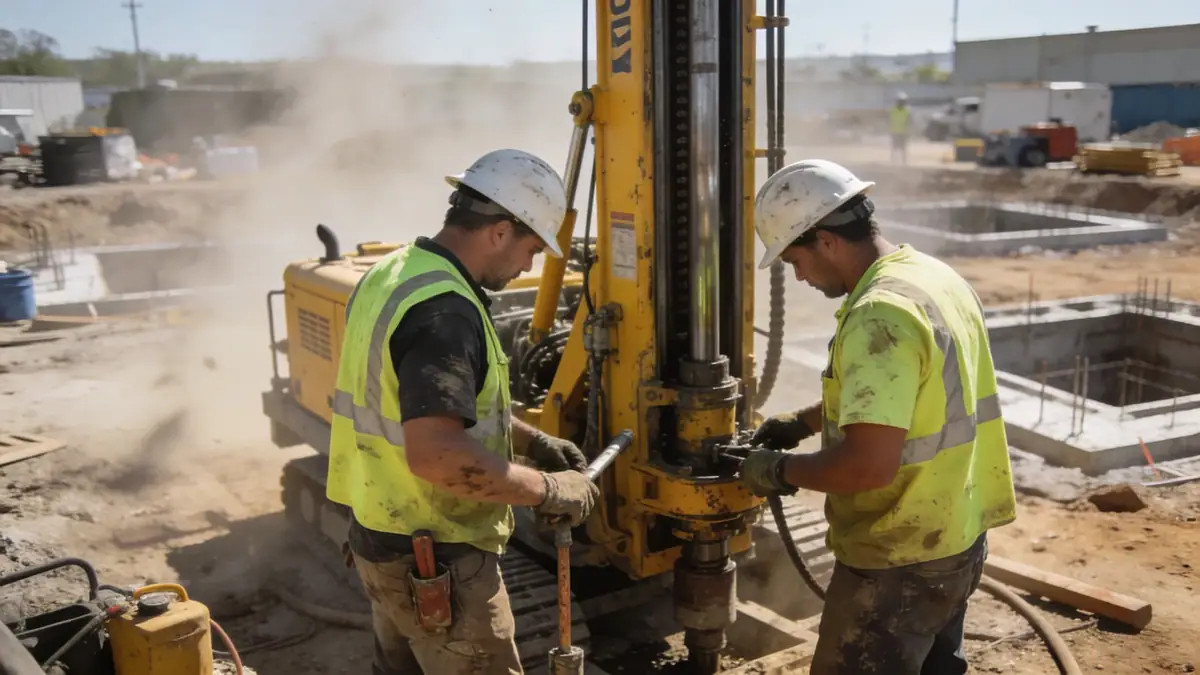
Our approach to geotechnical engineering in Akron follows a systematic process tailored to the region's geology. We begin with a desktop study of existing maps and records, followed by field investigations including spt boring to collect disturbed and undisturbed samples. In the laboratory, we conduct index tests, strength tests, and consolidation tests on representative specimens. Data analysis incorporates statistical methods to account for variability in glacial soils. We then develop site-specific parameters for bearing capacity, settlement, and seismic design. All work adheres to ASTM standards, ensuring reproducibility and compliance with local building codes.
Reference Technical Parameters
| Parameter | Reference Value |
|---|---|
| Predominant soil type | Glacial till (silty clay with sand and gravel) |
| Maximum seismic acceleration (PGA) | 0.15g (ASCE 7-16, Site Class C typical) |
| Typical groundwater level | 3–6 m below ground surface |
| Bedrock depth | 15–30 m (Ohio Shale) |
| Typical N60 range | 10–30 blows/0.3 m (glacial till) |
Local Considerations — Akron
Akron's geology is dominated by glacial till and outwash deposits, with localized lacustrine clays in former glacial lakes. The water table is often shallow in valley areas, requiring dewatering considerations. Seismic hazard is low but not negligible, with a PGA of 0.15g per ASCE 7. Foundation design must account for potential differential settlement between till and softer alluvium. For complex projects, we collaborate with our geotechnical engineering in Chicago office to leverage broader expertise. Additionally, we offer soil mechanics laboratory services to assess soil behavior under local conditions.
Request a Quote
Our team reviews your project and issues an initial report at no cost.
Or write us directly at [email protected]
Services in Akron
Applicable Standards
- ASTM D1586 (Standard Test Method for SPT)
- ASTM D2487 (Classification of Soils for Engineering Purposes)
- ASCE 7-16 (Minimum Design Loads and Associated Criteria for Buildings)
- International Building Code (IBC) 2021
- Ohio Building Code (OBC)
Frequently Asked Questions
What are the typical soil types encountered in Akron?
Akron's subsurface primarily consists of glacial till—a heterogeneous mixture of clay, silt, sand, and gravel. Lacustrine deposits of silty clay are also present in low-lying areas. These soils exhibit variable engineering properties, necessitating site-specific testing.
Is seismic design required for structures in Akron?
Yes. Per ASCE 7-16, Akron falls into Seismic Design Category B with a peak ground acceleration of 0.15g. While seismic risk is moderate, structures must comply with IBC provisions, including lateral force resistance and detailing for ductility.
Are geotechnical investigations mandatory for building permits in Akron?
The Ohio Building Code requires a geotechnical report for most structures, especially those with shallow foundations, basements, or in areas with known soil issues. Local authorities may waive this for minor projects, but it is strongly recommended for all developments.