Methodology
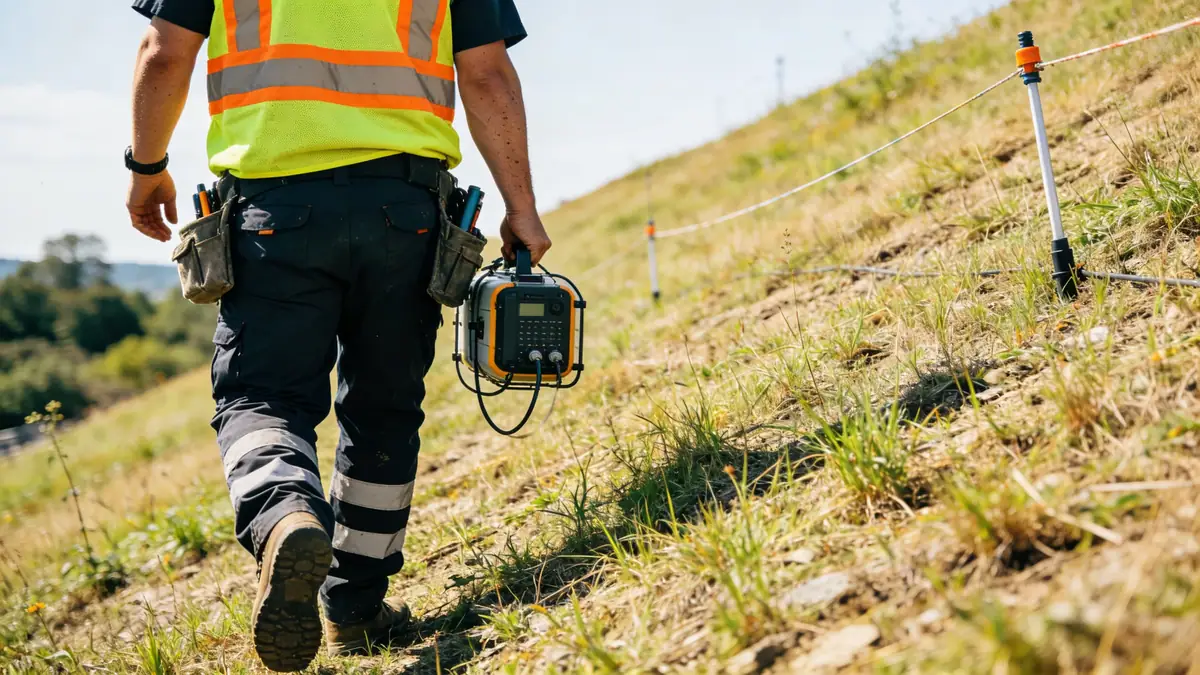
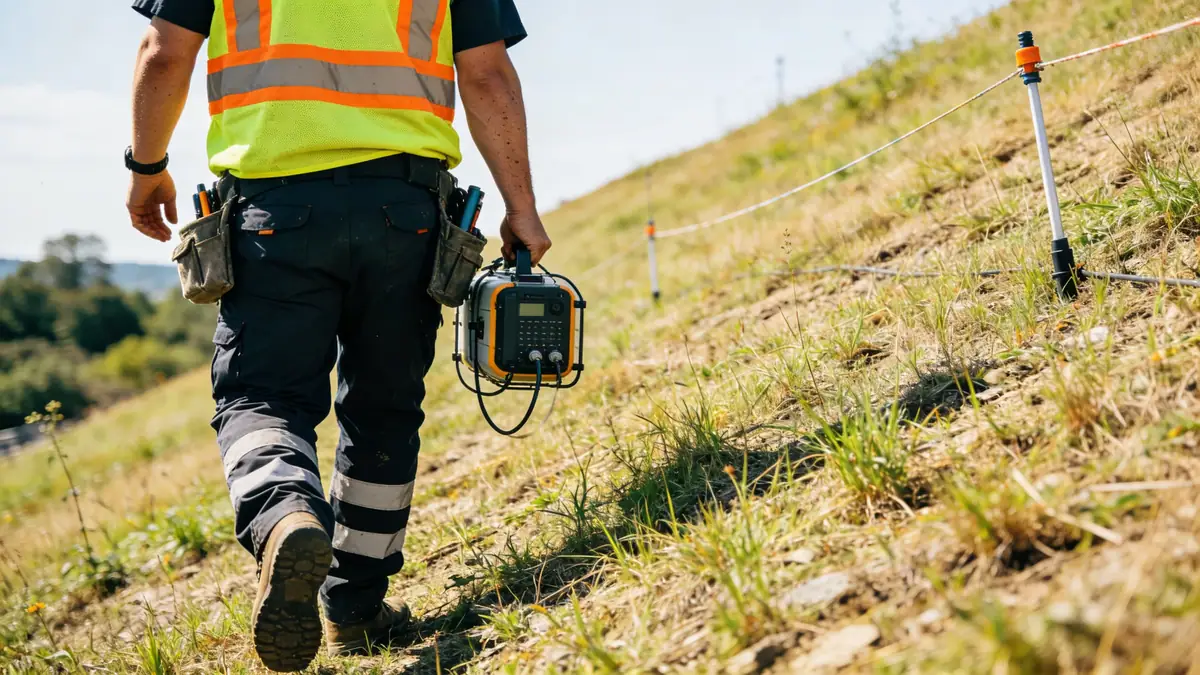
Our slope stability methodology follows a rigorous multi-phase process. First, we conduct a thorough site reconnaissance and subsurface investigation using Standard Penetration Testing (SPT) per ASTM D1586 and continuous sampling to depths up to 50 meters. Soil samples are then tested in our soil mechanics laboratory for shear strength parameters (cohesion and friction angle) via direct shear and triaxial tests. We perform limit equilibrium analyses using Bishop’s simplified method and Spencer’s method, with seismic coefficients derived from ASCE 7-22. For complex geometries, we employ finite element modeling (e.g., PLAXIS 2D) to evaluate deformation and factor of safety. A minimum factor of safety of 1.5 is required for static conditions and 1.1 for pseudo-static seismic scenarios. All results are documented with clear recommendations for mitigation if needed.
Reference Technical Parameters
| Parameter | Reference Value |
|---|---|
| Factor of Safety (Static) | ≥ 1.5 |
| Factor of Safety (Seismic) | ≥ 1.1 |
| Shear Strength (Cohesion) | 0–200 kPa |
| Friction Angle | 20°–45° |
| Borehole Depth | Up to 50 m |
Local Considerations — USA
Slope stability requirements vary significantly across the United States. In seismically active regions like Anchorage, Alaska, our analyses incorporate ground motion parameters from ASCE 7-22, while in the arid Southwest (e.g., Albuquerque, New Mexico), we address shallow failures in collapsible soils. For the humid Southeast (e.g., Atlanta, Georgia), we evaluate rainfall-induced landslides in residual soils. Our team adapts each study to local geology, climate, and building codes, ensuring compliance with state-specific regulations. We have executed projects in over 200 cities, including Akron, Allentown, and Anaheim, providing tailored solutions that reflect regional conditions.
Request a Quote
Our team reviews your project and issues an initial report at no cost.
Or write us directly at [email protected]
Applicable Standards
- ASTM D1586: Standard Test Method for Standard Penetration Test (SPT)
- ASCE 7-22: Minimum Design Loads and Associated Criteria for Buildings and Other Structures (Seismic)
- Eurocode 7: Geotechnical Design (for international projects)
Frequently Asked Questions
What is the minimum factor of safety required for slope stability in the USA?
For static conditions, our firm typically requires a minimum factor of safety of 1.5, as recommended by most US building codes. For seismic or rapid drawdown scenarios, a factor of safety of 1.1 is acceptable. These values ensure adequate stability against failure.
Which analytical methods does your team use for slope stability analysis?
We employ limit equilibrium methods such as Bishop’s simplified and Spencer’s method for circular and non-circular slip surfaces. For complex geometries or soil-structure interaction, we use finite element analysis with PLAXIS 2D. All analyses conform to ASCE 7 and local codes.
How long does a typical slope stability study take?
A standard slope stability study, including site investigation, laboratory testing, and analysis, typically takes 4 to 8 weeks. Expedited schedules are possible for urgent projects. The timeline depends on site access, depth of borings, and complexity of the geology.
How much does a slope stability study cost in the USA?
The cost of a slope stability study ranges from $1,260 to $4,200, depending on site accessibility, number of borings, laboratory tests, and analysis complexity. This is a 2026 reference range; we recommend contacting us for a project-specific quote.