Methodology
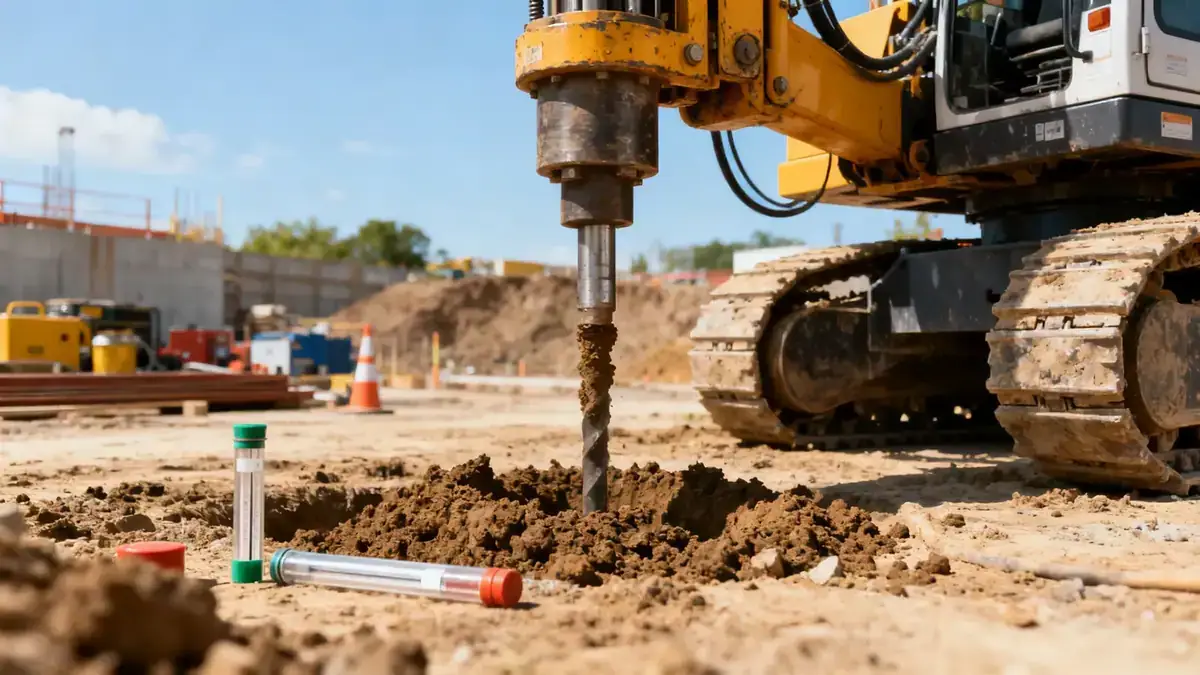
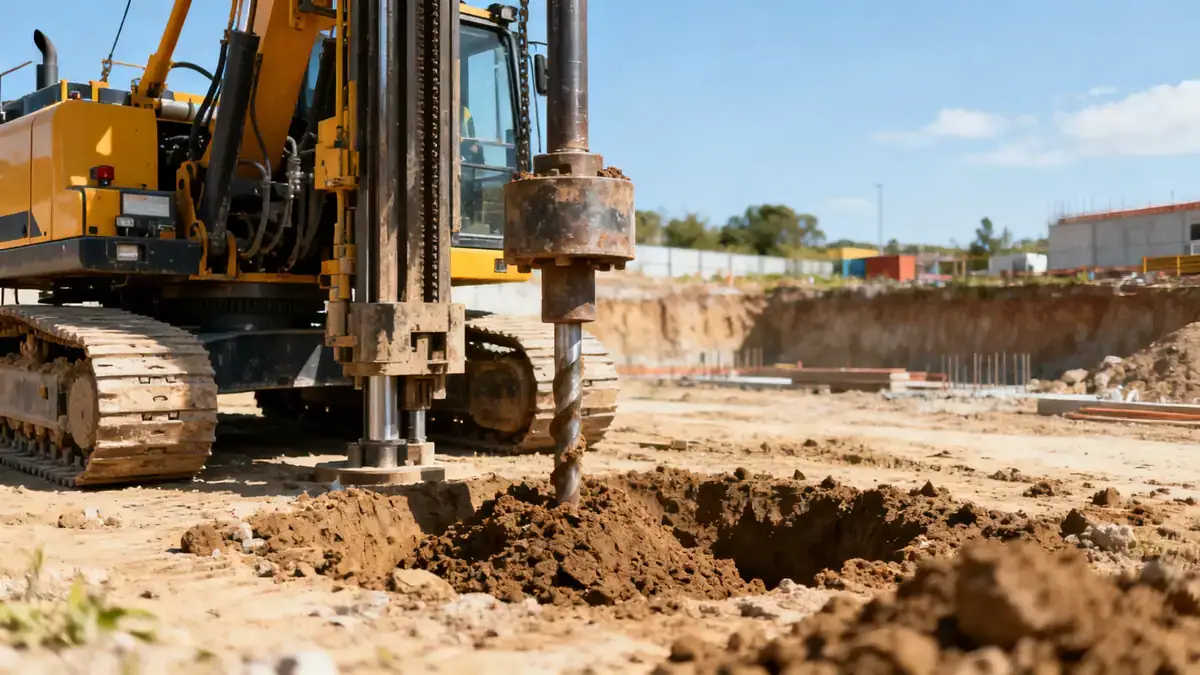
Our SPT boring methodology follows ASTM D1586-18, employing a standard split-spoon sampler driven by a 140-lb (63.5 kg) hammer falling 30 inches (76 cm). Borings extend to depths of 100 feet or more, with SPT measurements taken at 5-foot intervals or at every change in stratum. Soil samples are retrieved for laboratory classification, including moisture content, grain size analysis, and Atterberg limits. Our field teams use truck-mounted or track-mounted drill rigs equipped with hollow-stem augers or mud rotary systems, adapted to site conditions. Each boring log records blow counts (N-values), groundwater levels, and soil descriptions. Data is integrated with our soil mechanics laboratory for comprehensive geotechnical reports.
Reference Technical Parameters
| Parameter | Reference Value |
|---|---|
| SPT Hammer Energy Efficiency | 60-80% (for safety hammer) |
| Sampler Dimensions (split spoon) | 1.5 in ID, 2.0 in OD, 24 in length |
| Maximum Boring Depth | Up to 150 ft (45 m) |
| Sampling Interval | Every 5 ft (1.5 m) or at stratum changes |
| N-value Range (blows per foot) | 0 to >100 (very loose to very dense) |
Local Considerations — USA
The United States presents a wide range of geologic conditions that influence SPT boring execution. In coastal regions like Atlanta and Augusta, Georgia, the presence of soft clays and high groundwater requires careful casing and dewatering. In seismic zones such as Anchorage, Alaska, and Los Angeles, California, SPT data is critical for liquefaction assessment per ASCE 7. In arid areas like Albuquerque, New Mexico, and Phoenix, Arizona, dense sands and caliche layers may require auger modifications. Our firm adapts drilling techniques, sampling intervals, and reporting standards to meet local codes and soil behavior, ensuring reliable data for every project site.
Request a Quote
Our team reviews your project and issues an initial report at no cost.
Or write us directly at [email protected]
Applicable Standards
- ASTM D1586-18 Standard Test Method for Standard Penetration Test (SPT)
- ASTM D2487-17 Standard Practice for Classification of Soils for Engineering Purposes (Unified Soil Classification System)
- ASCE 7-22 Minimum Design Loads and Associated Criteria for Buildings and Other Structures (seismic site class)
- IBC 2021 International Building Code (geotechnical investigation requirements)
Frequently Asked Questions
What is the difference between SPT and CPT?
SPT (Standard Penetration Test) measures soil resistance by counting blows to drive a split-spoon sampler, providing disturbed samples for lab testing. CPT (Cone Penetration Test) uses a cone tip to measure continuous resistance and pore pressure, without soil retrieval. SPT is preferred for gravelly soils and when physical samples are needed.
What is the standard depth range for SPT borings?
Typical SPT borings range from 20 to 100 feet (6 to 30 m), but can extend to 150 feet (45 m) depending on project requirements and soil conditions. Depth is determined by the anticipated foundation loads and the depth of bearing strata.
How are SPT N-values corrected for overburden pressure?
N-values are corrected to a reference effective overburden pressure of 100 kPa (approximately 2,000 psf) using the formula N60 = N × (CN), where CN = (100/σ'v)^0.5, with σ'v being the effective overburden pressure. This correction accounts for confining stress effects.
How much does SPT boring cost in the United States?
Costs vary by location, depth, and site accessibility. A typical SPT boring ranges from $550 to $760 per borehole, including mobilization, drilling, sampling, and basic reporting. Additional lab testing, deeper borings, or difficult access may increase costs. We recommend requesting a project-specific quote.