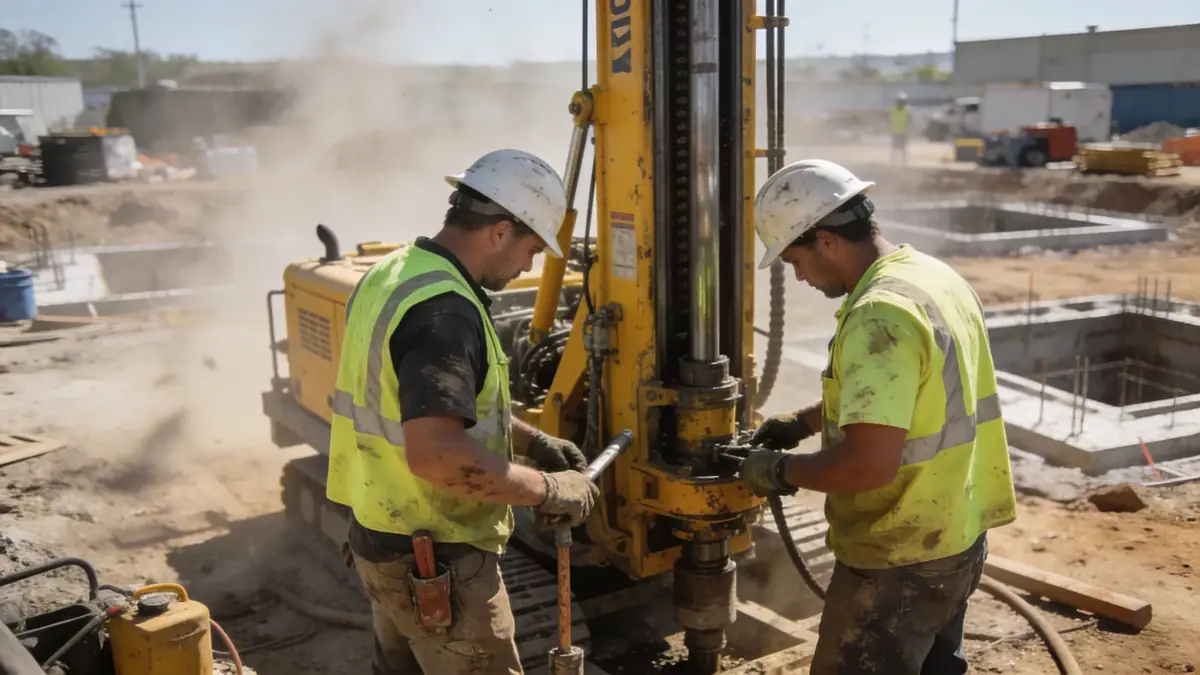
Methodology
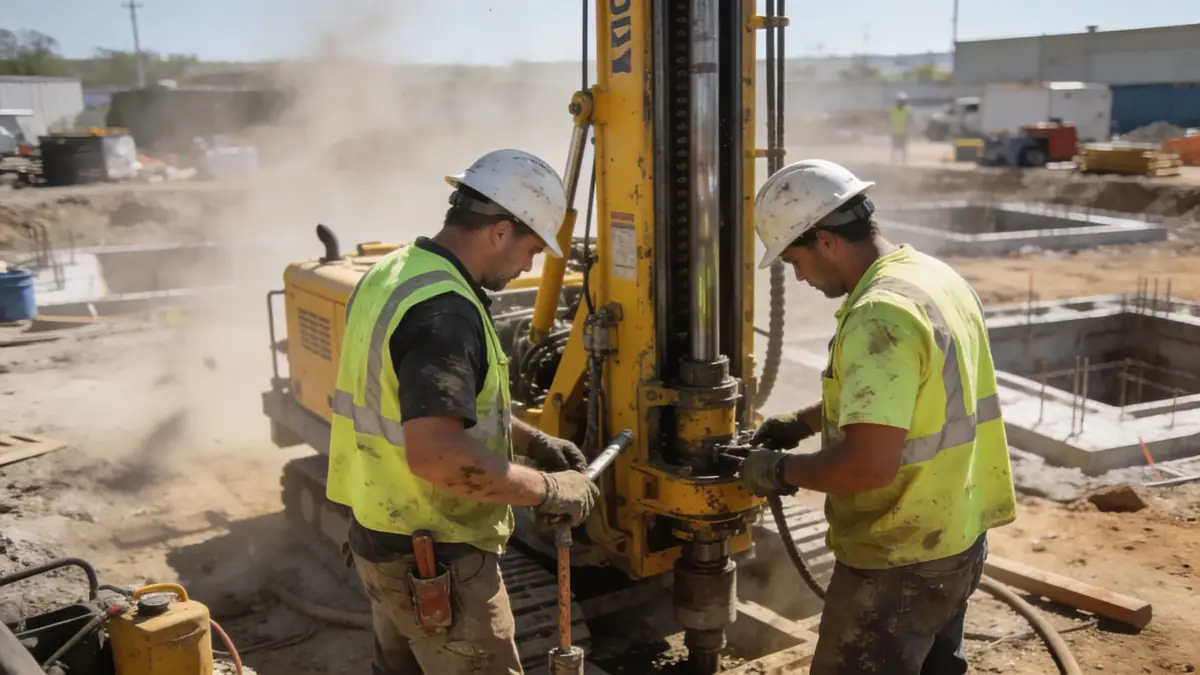
Our methodology for geotechnical engineering in Corona integrates thorough subsurface exploration, advanced laboratory testing, and analytical modeling. We employ standard penetration testing (SPT) per ASTM D1586 to obtain soil samples and measure resistance at regular intervals, typically 1.0 to 1.5 meters. For detailed soil classification, we perform grain size analysis (ASTM D6913) and Atterberg limits (ASTM D4318). Our spt boring program is tailored to project requirements, with depths ranging from 8 to 30 meters. Laboratory tests include direct shear, consolidation, and Proctor compaction to evaluate shear strength, compressibility, and compaction characteristics. This data informs our recommendations for foundations, earthworks, and seismic design.
Reference Technical Parameters
| Parameter | Reference Value |
|---|---|
| Predominant soil type | Alluvial sands, silts, and clays with occasional gravel layers |
| Maximum seismic acceleration (PGA) | 0.4g to 0.6g (ASCE 7-16, Site Class D) |
| Typical groundwater level | 10 to 25 feet below ground surface, variable seasonally |
| Bedrock depth | 50 to 100+ feet (deep alluvium overlying sedimentary rock) |
| Typical N60 range (SPT) | 5 to 30 blows per foot (soft to dense sands/silts) |
Local Considerations — Corona California
Corona's geology is dominated by Quaternary alluvium from the Santa Ana River and its tributaries, with localized areas of older Pleistocene deposits. The city lies within the San Andreas Fault zone, requiring rigorous seismic hazard analysis per ASCE 7. Expansive clay soils are common in some neighborhoods, necessitating specialized foundation design. Groundwater levels fluctuate, impacting excavation and dewatering plans. Our team draws on extensive experience in the region, including projects near the Foothill Parkway and the 15/91 interchange. For broader regional context, see geotechnical engineering en Los Angeles. Additionally, we integrate advanced soil mechanics laboratory testing to characterize soil behavior accurately.
Request a Quote
Our team reviews your project and issues an initial report at no cost.
Or write us directly at [email protected]
Services in Corona California
Applicable Standards
- ASTM D1586 (Standard Penetration Test)
- ASCE 7-16 (Minimum Design Loads and Associated Criteria for Buildings and Other Structures)
- California Building Code (CBC) 2022
- ASTM D2487 (Unified Soil Classification System)
- ASTM D4318 (Atterberg Limits)
Frequently Asked Questions
What soil types are common in Corona, California?
Corona's subsurface primarily consists of alluvial sands, silts, and clays deposited by ancient floodplains. In some areas, expansive clays and loose sands are present, requiring careful evaluation for foundation design and earthwork.
Does Corona have specific seismic design requirements?
Yes, Corona is located in a seismically active region near the San Andreas Fault. The California Building Code (CBC) and ASCE 7 require site-specific ground motion analysis, including determination of Site Class and peak ground acceleration (PGA) for design.
Are geotechnical studies mandatory for construction in Corona?
While not always legally required for all projects, most local building departments recommend or require geotechnical reports for new construction, additions, or hillside developments to ensure soil stability and seismic safety.