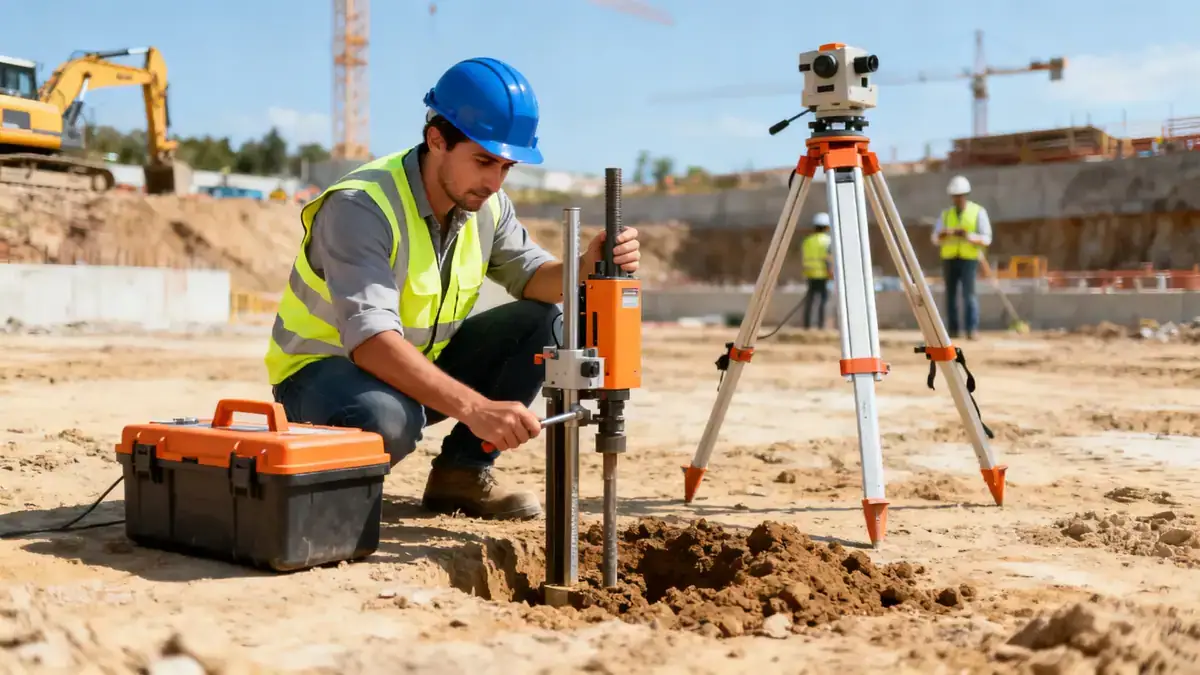
Methodology
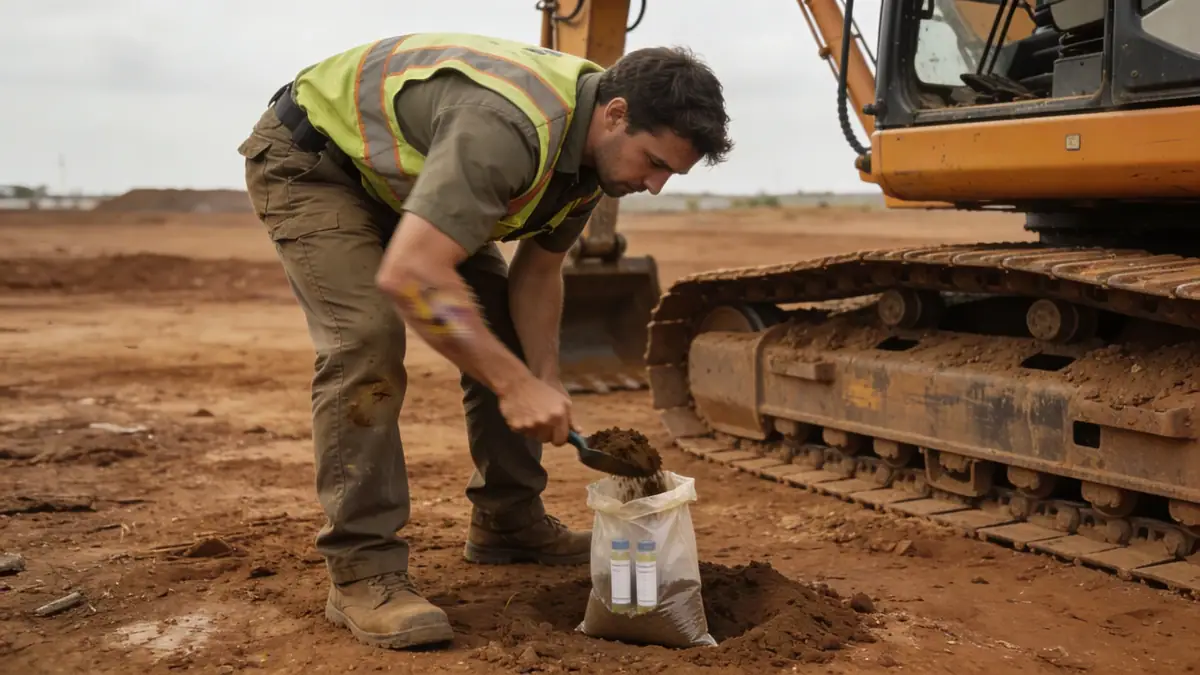
Our methodology for geotechnical engineering in Garland begins with a comprehensive review of existing geologic maps and nearby project records. We then perform field investigations, including spt boring to obtain disturbed and undisturbed samples at regular intervals, following ASTM D1586. Laboratory testing covers moisture content, Atterberg limits, unconfined compression, and consolidation. All data is integrated into a geotechnical model that accounts for local variability. We analyze bearing capacity, settlement, and seismic site class per ASCE 7, providing clear recommendations for foundation type and depth.
Reference Technical Parameters
| Parameter | Reference Value |
|---|---|
| Predominant soil type | Fat clay (CH) and sandy clay (CL) over weathered shale |
| Maximum seismic acceleration (PGA) | 0.1–0.2 g (ASCE 7 Site Class C/D) |
| Typical groundwater level | 3–6 m below grade (seasonal variation) |
| Bedrock depth | 10–20 m (Eagle Ford Shale) |
| Typical N60 range (SPT) | 5–15 blows/ft in clay; 15–40 in shale |
Local Considerations — Garland
Garland's geology is dominated by Cretaceous-age marine sediments, primarily the Eagle Ford Shale and Austin Chalk formations. Near-surface soils are highly plastic clays (CH) with high shrink-swell potential, requiring careful moisture control and deep foundations for sensitive structures. The water table is shallow in low-lying areas near Rowlett Creek, necessitating dewatering plans for excavations. Seismic hazard is moderate, with PGA values of 0.1–0.2 g, influencing site class and liquefaction screening. Our team has extensive experience with these conditions, and we leverage our geotechnical engineering en Houston expertise to deliver reliable solutions for Garland projects.
Request a Quote
Our team reviews your project and issues an initial report at no cost.
Or write us directly at [email protected]
Services in Garland
Applicable Standards
- ASTM D1586 (Standard Penetration Test)
- ASCE 7 (Minimum Design Loads for Buildings)
- International Building Code (IBC) 2021
- City of Garland Geotechnical Requirements
Frequently Asked Questions
What are the typical soil types encountered in Garland?
Garland soils are primarily high-plasticity clays (CH) over weathered Eagle Ford Shale. Sandy clays and silty clays are also present near creek floodplains. These expansive clays require specialized foundation design to mitigate differential movement.
How does seismic hazard affect geotechnical design in Garland?
Garland lies in Seismic Design Category C per ASCE 7, with a maximum considered earthquake spectral response acceleration (S_DS) of about 0.2 g. Site-specific response spectra may be required for critical facilities, and liquefaction potential should be evaluated in saturated sandy soils.
Are geotechnical studies mandatory for residential construction in Garland?
While the city does not require a geotechnical report for all single-family homes, most lenders and structural engineers recommend one—especially for slab-on-grade foundations on expansive clay. For commercial and multi-family projects, a geotechnical investigation is typically required by the building official.