Methodology
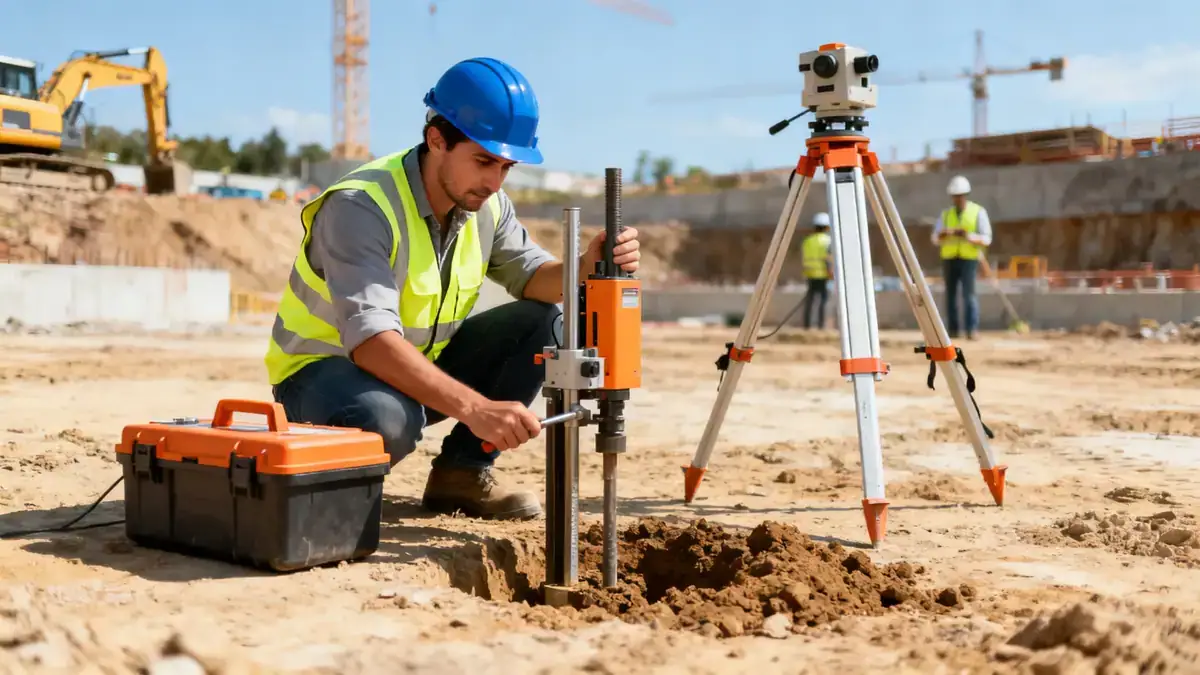
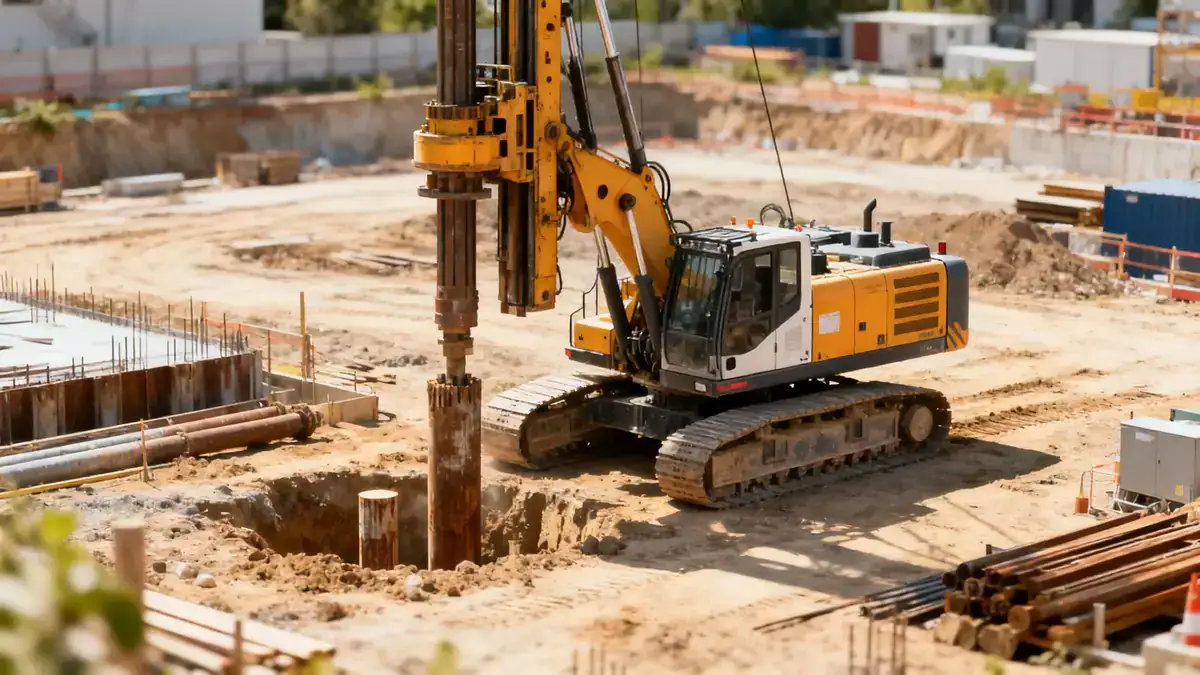
Our methodology in Grand Rapids begins with a thorough review of regional geologic maps and existing boring logs. We then deploy standard penetration testing (SPT) per ASTM D1586 to characterize soil strata at 1.0–1.5 m intervals, typically to depths of 8–15 m for residential projects and up to 30 m for industrial structures. Samples are analyzed in our soil mechanics laboratory for grain size, Atterberg limits, and strength parameters. Field and lab data are integrated to develop site-specific soil profiles, groundwater conditions, and seismic site classifications, providing foundation recommendations that align with ASCE 7 and local building codes.
Reference Technical Parameters
| Parameter | Reference Value |
|---|---|
| Predominant soil type | Glacial till with interbedded sand, silt, and clay |
| Maximum seismic acceleration (PGA) | 0.10–0.15 g (ASCE 7, Site Class D) |
| Typical groundwater level | 2–5 m below ground surface |
| Bedrock depth | Variable; typically >30 m (Marshall Sandstone) |
| Typical N60 range (SPT) | 5–30 blows/ft (sands to stiff clays) |
Local Considerations — Grand Rapids
Grand Rapids lies within the Michigan Basin, underlain by glacial deposits up to 100 m thick. The predominant soils are glacial till, outwash sands, and lacustrine clays, with localized organic layers in ancient lakebeds. Groundwater is generally shallow, often encountered at 2–5 m, requiring dewatering considerations for deep excavations. Seismic hazard is moderate (PGA 0.10–0.15 g), but site amplification due to soft soils can increase demands per ASCE 7. Older downtown areas may have undocumented fill, while suburban developments in Kent County often encounter stiff tills. Our team has extensive experience with these conditions, and our work is coordinated from our regional office; learn more about geotechnical engineering en Chicago for broader regional context. For specific investigations, we integrate spt boring and other field methods tailored to each site.
Request a Quote
Our team reviews your project and issues an initial report at no cost.
Or write us directly at [email protected]
Services in Grand Rapids
Applicable Standards
- ASTM D1586 (Standard Penetration Test)
- ASCE 7 (Minimum Design Loads for Buildings)
- IBC 2021 (International Building Code)
- Michigan Building Code (based on IBC)
Frequently Asked Questions
What are the typical soil conditions in Grand Rapids for foundation design?
Grand Rapids soils are primarily glacial till with interbedded sands, silts, and clays. Bearing capacities range from 2,000–4,000 psf for shallow foundations on stiff till, but organic layers and variable groundwater require site-specific testing per ASTM D1586 to avoid differential settlement.
Is seismic design required for buildings in Grand Rapids?
Yes, under the Michigan Building Code and ASCE 7, seismic design is required. Grand Rapids falls in Seismic Design Category B–C with PGA values around 0.10–0.15 g. Site-specific soil classification (Site Class D typical) can increase spectral accelerations, necessitating proper geotechnical evaluation.
Are geotechnical studies mandatory for residential construction in the area?
While the Michigan Building Code does not explicitly mandate geotechnical reports for all residential projects, most local jurisdictions in Kent County require soil investigations for new foundations, especially in areas with known fill or high groundwater. Lenders often require them for mortgage approvals.