
Methodology
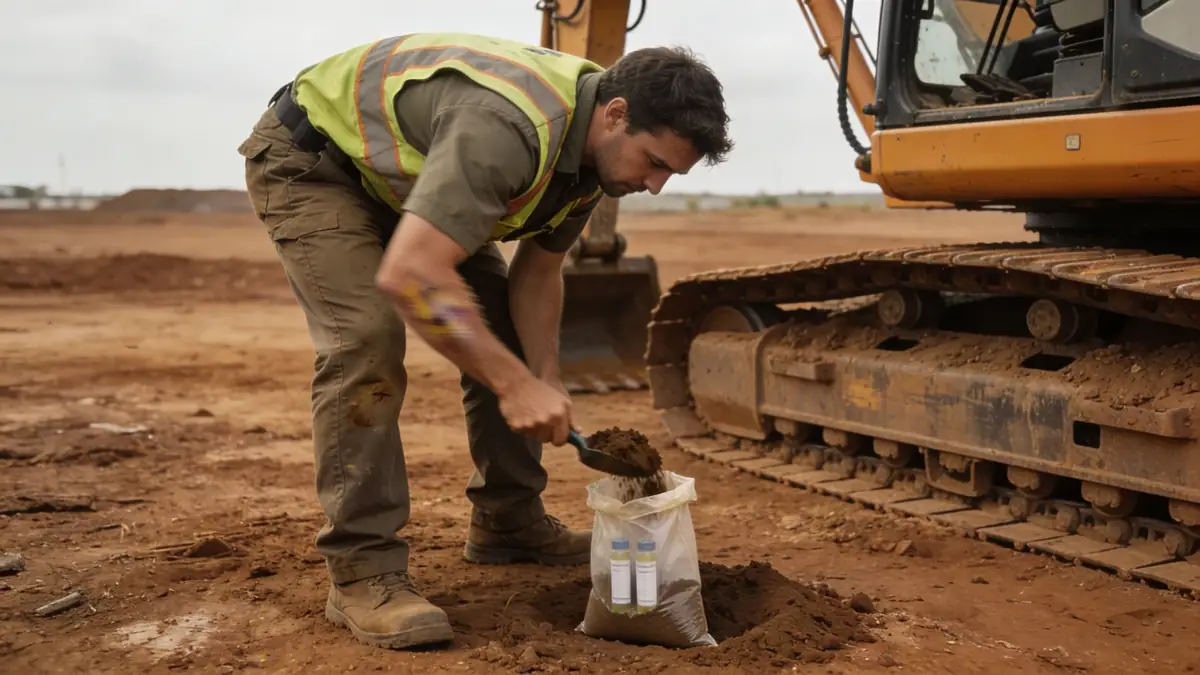
Our methodology for geotechnical engineering in Laredo begins with a comprehensive site reconnaissance and review of existing geological maps. We deploy a combination of spt boring and cone penetration testing to characterize subsurface stratigraphy, with sampling intervals following ASTM D1586. Laboratory testing on retrieved samples includes index properties, strength, and consolidation tests. Our approach integrates local seismic hazard considerations, referencing ASCE 7-16 for spectral accelerations. The resulting geotechnical model informs foundation design parameters, slope stability analyses, and earthwork recommendations, all calibrated to Laredo’s specific soil and groundwater conditions.
Reference Technical Parameters
| Parameter | Reference Value |
|---|---|
| Predominant Soil Type | Clay and clayey sand with limestone fragments |
| Maximum Seismic Acceleration (PGA) | 0.10g to 0.15g (ASCE 7-16, Site Class C/D) |
| Typical Groundwater Level | 5 to 15 m below grade |
| Bedrock Depth | 10 to 30 m (limestone) |
| Typical N60 Range | 5 to 30 blows/0.3 m |
Local Considerations — Laredo
Laredo’s geology is dominated by alluvial deposits of the Rio Grande, including expansive clays prone to volume changes with moisture variation. Seismic design is governed by low-to-moderate hazard, with Site Class C or D typical. Groundwater levels fluctuate seasonally, affecting excavation stability. Older neighborhoods near downtown may have undocumented fill, while new developments on the outskirts encounter competent limestone at depth. Common foundation solutions include drilled piers bearing on rock or stiff clays, with moisture control measures for slabs-on-grade. As a complement to our local work, our geotechnical engineering in Houston team provides additional resources for complex projects across Texas.
Request a Quote
Our team reviews your project and issues an initial report at no cost.
Or write us directly at [email protected]
Services in Laredo
Applicable Standards
- ASTM D1586 (Standard Test Method for SPT)
- ASCE 7-16 (Minimum Design Loads for Buildings and Other Structures)
- International Building Code (IBC 2021)
- Texas Administrative Code, Title 30, Chapter 336
Frequently Asked Questions
What are the primary soil types encountered in Laredo?
Laredo’s subsurface typically consists of clay and clayey sand alluvium over limestone bedrock. Expansive clays are common near the Rio Grande, requiring careful moisture management. Deeper deposits often include gravel and caliche layers.
Does Laredo have significant seismic risk?
Laredo is in a low-to-moderate seismic zone per ASCE 7-16, with peak ground accelerations of 0.10g to 0.15g. Site-specific studies are recommended for critical facilities, but standard code-compliant designs generally suffice for typical structures.
Are geotechnical studies mandatory for construction in Laredo?
The International Building Code requires geotechnical investigations for most commercial buildings and multi-family residential projects. Local jurisdictions may also mandate studies for subdivisions or infrastructure. Our team helps clients navigate these requirements efficiently.