Methodology

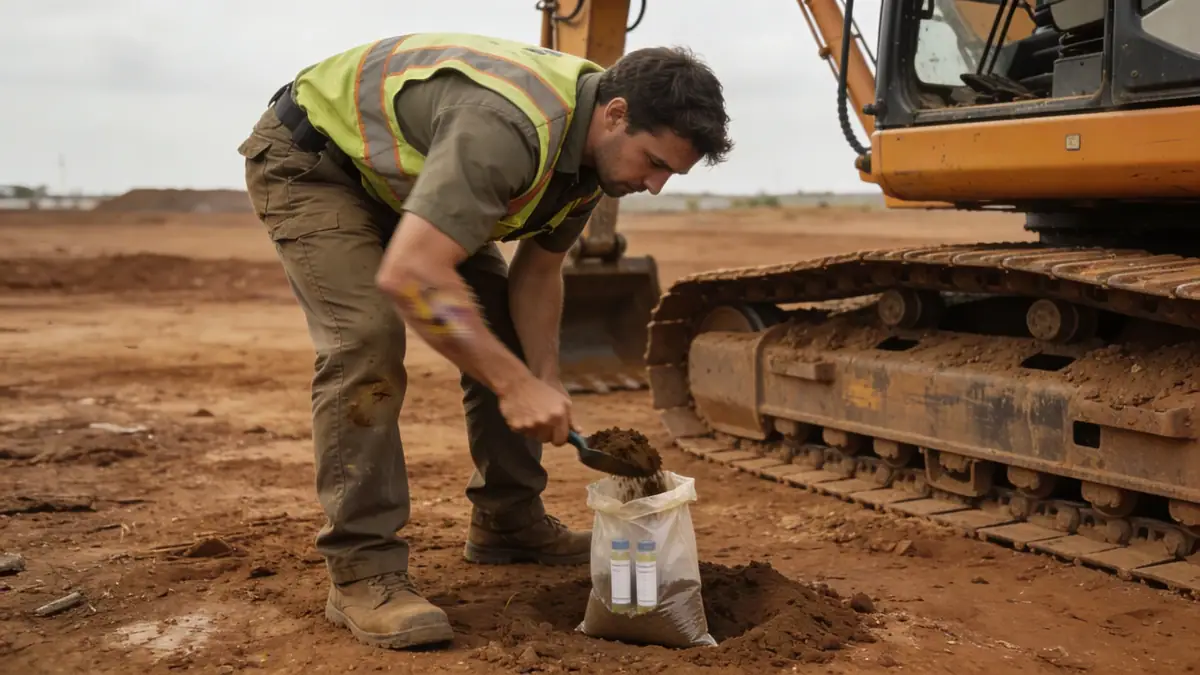
Our methodology for geotechnical engineering in Madison integrates field exploration, laboratory testing, and analytical modeling to characterize subsurface conditions. We conduct spt boring in accordance with ASTM D1586 to obtain soil samples and measure resistance, with sampling intervals typically every 1.0 to 1.5 meters. In cohesive soils, we perform undisturbed sampling for advanced laboratory tests. Our team analyzes data to determine soil stratigraphy, groundwater levels, and engineering properties such as shear strength and compressibility. This systematic approach, combined with local geological knowledge, enables us to provide accurate foundation recommendations and risk assessments for Madison's diverse projects.
Reference Technical Parameters
| Parameter | Reference Value |
|---|---|
| Predominant soil type | Glacial till (sand, silt, clay with gravel) |
| Maximum seismic acceleration (PGA) | 0.15g (per ASCE 7-16, Site Class D) |
| Typical groundwater level | 3–10 ft below ground surface (varies seasonally) |
| Bedrock depth | 50–200 ft (dolomite/limestone) |
| Typical N60 range | 10–50 blows/ft (dense till) |
Local Considerations — Madison
Madison's geology is dominated by glacial till deposited during the Wisconsin glaciation, resulting in heterogeneous soils with variable density and permeability. The presence of numerous lakes and wetlands creates high groundwater levels, requiring careful dewatering and drainage considerations. Seismic design follows ASCE 7-16, with a maximum PGA of 0.15g and Site Class D typically assigned. The downtown area, built on a narrow isthmus, presents challenging conditions with shallow water table and soft lakebed sediments. In contrast, suburban developments on upland tills offer more favorable bearing capacity. Our team also coordinates with local authorities for compliance with city-specific fill and compaction ordinances. For regional context, our geotechnical engineering en Chicago team provides similar expertise in the broader Midwest.
Request a Quote
Our team reviews your project and issues an initial report at no cost.
Or write us directly at [email protected]
Services in Madison
Applicable Standards
- ASTM D1586 (Standard Penetration Test)
- ASCE 7-16 (Minimum Design Loads and Associated Criteria for Buildings and Other Structures)
- IBC 2021 (International Building Code)
- Wisconsin Administrative Code (SPS 321 – Building Construction)
- City of Madison Stormwater and Erosion Control Ordinance
Frequently Asked Questions
What are the typical soil conditions found in Madison?
Madison's soils are primarily glacial till, consisting of a heterogeneous mixture of sand, silt, clay, and gravel. These deposits often contain cobbles and boulders. In low-lying areas near lakes, soft organic soils and peat may be present, requiring special foundation designs.
Is seismic design required for projects in Madison?
Yes, seismic design is required per the International Building Code and ASCE 7-16. Madison falls into Seismic Design Category B, with a maximum PGA of 0.15g. Site-specific soil classification (Site Class D is typical) influences the design response spectrum and foundation requirements.
Are geotechnical studies mandatory for construction in Madison?
While not always legally mandated for all projects, most municipalities and lenders require a geotechnical investigation for building permits, especially for commercial structures or developments in areas with known soil variability. Our team recommends a study for any project to mitigate risks related to settlement, bearing capacity, and groundwater.