Methodology

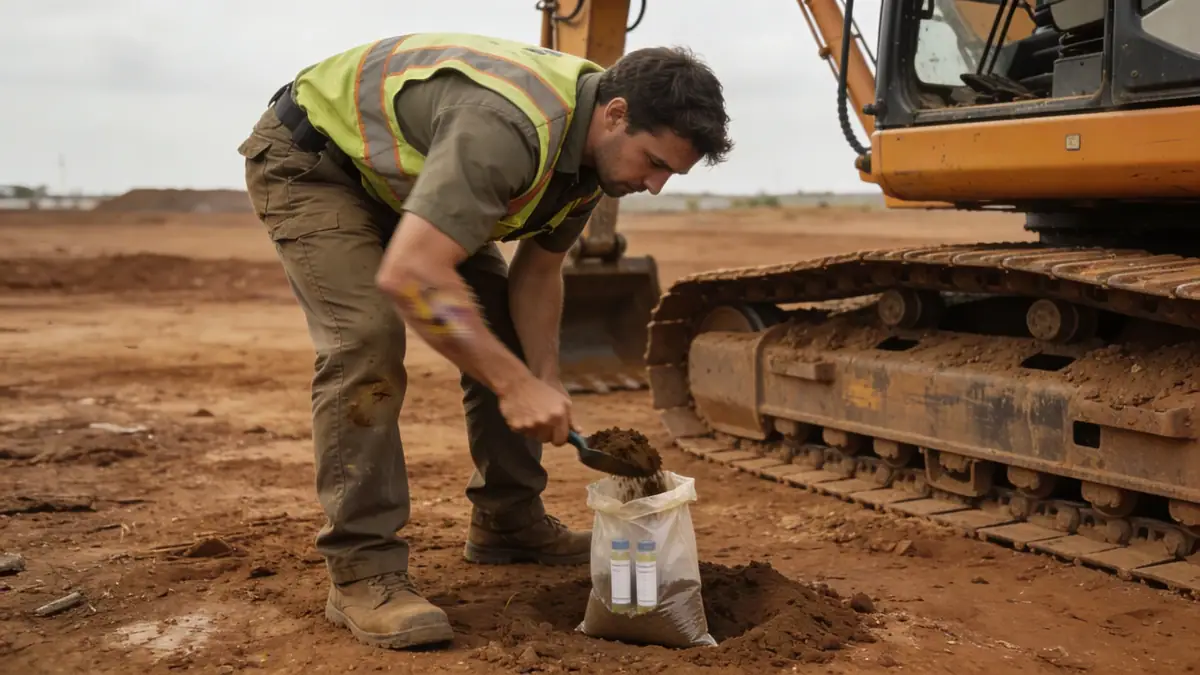
Our approach to geotechnical engineering in Montgomery Alabama integrates site-specific exploration with advanced analysis. We perform standard penetration testing (SPT) per ASTM D1586 at intervals of 1.5 meters to characterize soil strata and obtain N60 values. Continuous sampling via thin-walled tubes (Shelby tubes) is employed for cohesive soils. Laboratory testing includes Atterberg limits, grain size distribution, and unconfined compression. For projects requiring deeper investigation, we utilize spt boring to depths up to 30 meters, ensuring reliable data for foundation design and slope stability assessments.
Reference Technical Parameters
| Parameter | Reference Value |
|---|---|
| Predominant soil type | Low-plasticity clay (CL), silty sand (SM) |
| Maximum seismic acceleration (PGA) | 0.10–0.15 g (ASCE 7-16, Site Class D) |
| Typical groundwater level | 3–8 m below grade |
| Bedrock depth | >30 m (Coastal Plain sediments) |
| Typical N60 range (SPT) | 5–15 blows/0.3 m (clays); 10–25 blows/0.3 m (sands) |
Local Considerations — Montgomery Alabama
Montgomery’s geology demands careful attention to expansive clays and variable groundwater. The region lies in Seismic Zone 1 per IBC 2018, with a mapped spectral acceleration (Ss) of 0.15 g and Site Class D soils amplifying ground motion. Our team integrates these factors into foundation recommendations, often specifying drilled piers or soil improvement for structures on soft clays. For projects in the downtown area—where fill soils and old utilities are common—we emphasize thorough subsurface characterization. We coordinate with our geotechnical engineering en Atlanta hub to ensure consistent regional standards. Additionally, we provide specialized soil mechanics laboratory testing to evaluate swelling potential and consolidation behavior, critical for long-term performance.
Request a Quote
Our team reviews your project and issues an initial report at no cost.
Or write us directly at [email protected]
Services in Montgomery Alabama
Applicable Standards
- ASTM D1586 (Standard Penetration Test)
- ASCE 7-16 (Minimum Design Loads for Buildings)
- IBC 2018 (International Building Code)
- ASTM D2487 (Unified Soil Classification System)
- ASTM D4318 (Atterberg Limits)
Frequently Asked Questions
What are the typical soil conditions in Montgomery Alabama?
Soils are predominantly low-plasticity clays and silty sands of the Coastal Plain, with moderate compressibility and shrink-swell potential. Groundwater is typically 3–8 m deep, and bedrock is absent at shallow depths.
Is seismic design required in Montgomery Alabama?
Yes. Per the 2018 IBC, Montgomery is in Seismic Zone 1 with a mapped spectral acceleration (Ss) of 0.15 g. Site Class D soils require design for moderate ground shaking, often using ASCE 7-16 procedures.
Are geotechnical studies mandatory for construction in Montgomery?
While not always legally required, most commercial and multi-family projects mandate subsurface investigations per IBC Chapter 18. Our team recommends studies for any significant structure to mitigate risk from expansive soils and variable groundwater.