
Methodology
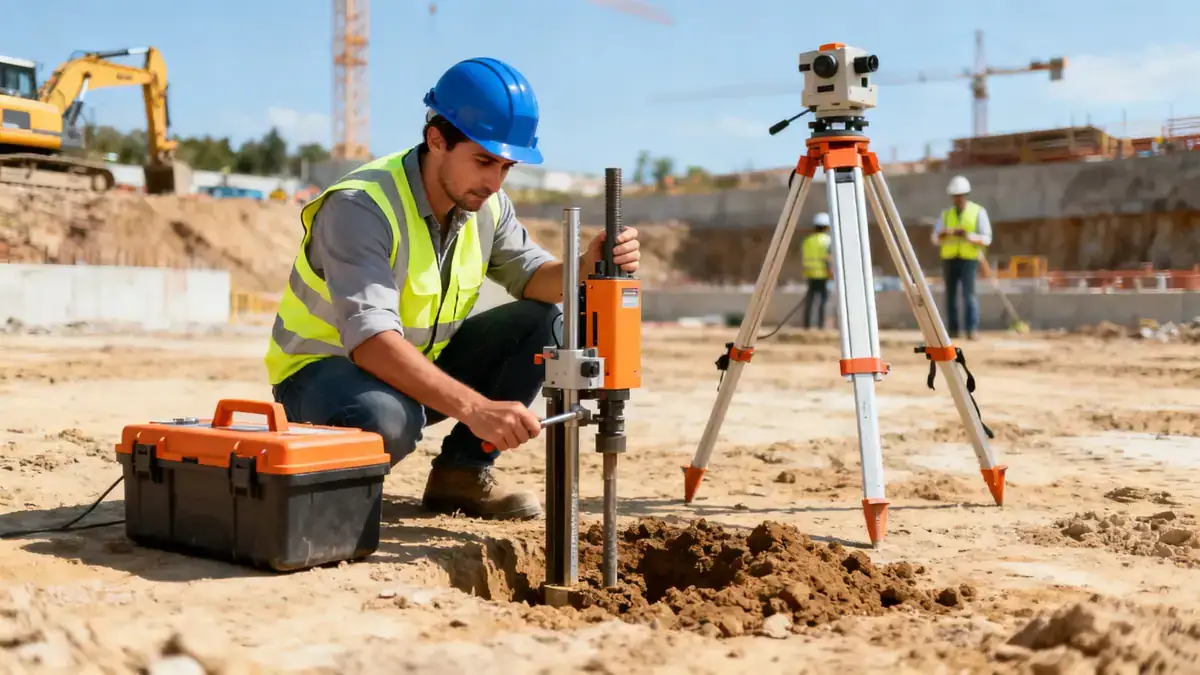
Our approach to geotechnical engineering in Orange California begins with a thorough review of existing geological data and site-specific conditions. We employ a phased investigation strategy, starting with non-invasive surveys to map subsurface anomalies. Subsequent field programs, including spt boring, provide detailed soil profiles and strength parameters. Advanced laboratory testing, such as consolidation and direct shear tests, complements field data to characterize soil behavior under load. All investigations adhere to ASTM standards, ensuring reliable results for foundation design and slope stability analysis.
Reference Technical Parameters
| Parameter | Reference Value |
|---|---|
| Predominant soil type | Alluvial sands, silts, and clays with interbedded gravels |
| Maximum seismic acceleration (PGA) | 0.4g to 0.6g (Site Class D, per ASCE 7) |
| Typical groundwater level | 3 to 10 meters below ground surface |
| Bedrock depth | Variable, typically 30 to 100+ meters |
| Typical N60 range (SPT) | 5 to 30 blows per foot (cohesionless soils); 10 to 40 (cohesive) |
Local Considerations — Orange California
Orange California's geology is dominated by Quaternary alluvial deposits from the Santa Ana River and its tributaries, consisting of interbedded sands, silts, and clays. The groundwater table fluctuates seasonally, often within 3–10 meters of the surface, requiring careful dewatering considerations. Seismically, the region is influenced by the San Andreas and Newport-Inglewood fault zones, with design ground motions per ASCE 7. Older neighborhoods may have undocumented fill, while newer developments on the eastern foothills encounter stiffer materials. Our team's familiarity with these contrasts ensures tailored solutions. For broader regional context, our geotechnical engineering en Los Angeles practice provides complementary insights into Southern California's diverse subsurface conditions.
Request a Quote
Our team reviews your project and issues an initial report at no cost.
Or write us directly at [email protected]
Services in Orange California
Applicable Standards
- ASTM D1586
- ASCE 7
- California Building Code (CBC)
- ASTM D2487
- ASTM D3080
Frequently Asked Questions
What are the typical soil types encountered in Orange California?
The predominant soils are alluvial sands, silts, and clays, often interbedded with gravel layers. These deposits originate from the Santa Ana River system and vary in density and consistency with depth.
How does seismic activity affect geotechnical design in Orange California?
The region is in a high seismic zone with peak ground accelerations up to 0.6g. Design must account for liquefaction potential in loose sands, lateral spreading near slopes, and site-specific response spectra per ASCE 7.
Are geotechnical investigations mandatory for construction in Orange California?
Yes, the California Building Code requires site-specific geotechnical reports for most new structures, especially those in seismic zones. Local jurisdictions may have additional requirements for hillside or floodplain areas.