
Methodology
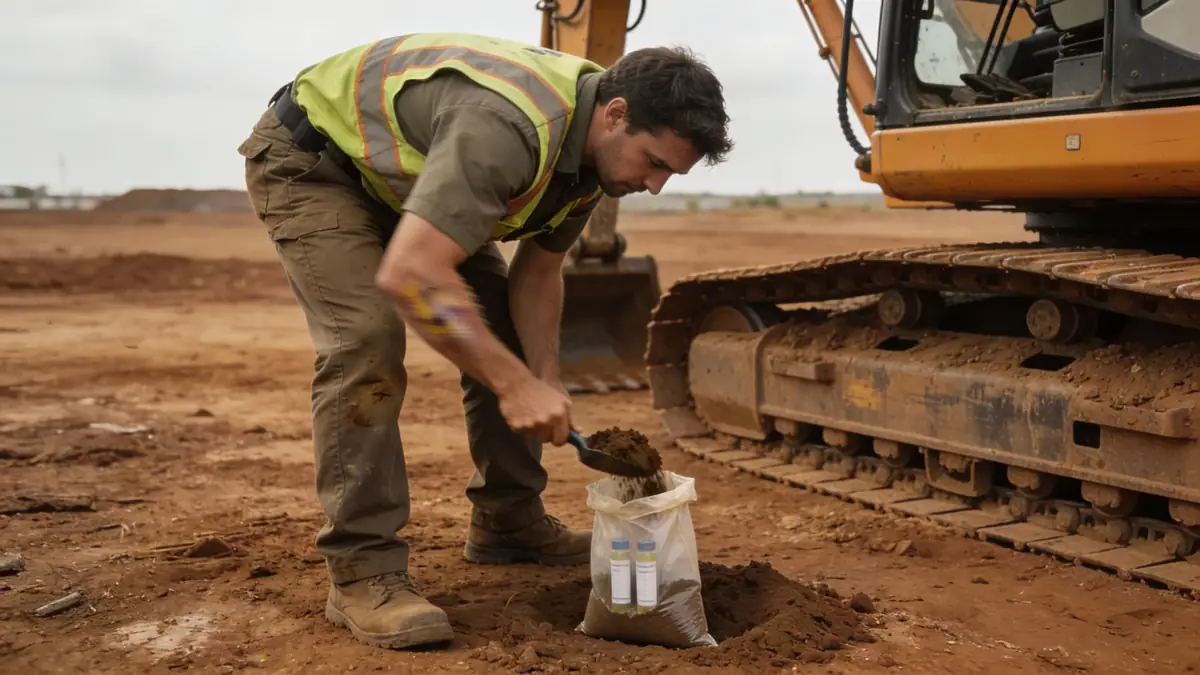
Our approach in Oxnard integrates field investigations, such as spt boring, with advanced laboratory testing to characterize subsurface conditions. We employ standard penetration tests (SPT) per ASTM D1586 at 1.5-meter intervals to depths of 15–30 meters, depending on project scale. Seismic hazard analyses follow ASCE 7-16 to determine site-specific response spectra. Our methodology prioritizes risk mitigation, from liquefaction assessment to foundation design, ensuring compliance with local codes while optimizing cost-efficiency.
Reference Technical Parameters
| Parameter | Reference Value |
|---|---|
| Predominant soil type | Alluvium (silty sands, sandy silts) |
| Maximum seismic acceleration (PGA) | 0.4g (ASCE 7-16, Site Class D) |
| Typical groundwater level | 2–5 m below grade |
| Bedrock depth | >30 m (deep alluvium) |
| Typical N60 range | 5–30 blows/ft (SPT) |
Local Considerations — Oxnard
Oxnard's geology is dominated by Quaternary alluvium and marine terrace deposits, with shallow groundwater typically 2–5 meters below grade. The city lies in a seismically active region, with peak ground acceleration (PGA) of 0.4g or higher per California Building Code. Local soil conditions vary: coastal areas feature loose sands prone to liquefaction, while inland zones exhibit silty clays with moderate plasticity. Historical liquefaction during the 1994 Northridge event informs our hazard assessments. Our team coordinates with Ventura County requirements for site-specific seismic studies. For broader regional context, see our geotechnical engineering services from Los Angeles.
Request a Quote
Our team reviews your project and issues an initial report at no cost.
Or write us directly at [email protected]
Services in Oxnard
Applicable Standards
- ASTM D1586 (Standard Penetration Test)
- ASCE 7-16 (Minimum Design Loads for Buildings)
- California Building Code (CBC) 2022
- Ventura County Grading and Erosion Control Ordinance
Frequently Asked Questions
What are the typical soil conditions in Oxnard?
Oxnard's soils are primarily alluvial deposits, including silty sands and sandy silts, with shallow groundwater at 2–5 meters. Coastal areas may have loose sands, while inland zones contain stiff clays. These conditions require careful geotechnical evaluation for foundation design.
How does seismic activity affect geotechnical engineering in Oxnard?
Oxnard is in a high-seismicity zone with PGA up to 0.4g. The 1994 Northridge earthquake caused liquefaction in nearby areas. Geotechnical studies must assess liquefaction potential, site amplification, and fault proximity per ASCE 7-16 and CBC.
Are geotechnical studies mandatory for construction in Oxnard?
Yes, most new construction and significant renovations require a geotechnical investigation per Ventura County and California Building Code. Studies must address soil bearing capacity, seismic hazards, and groundwater conditions to ensure structural safety.