Methodology

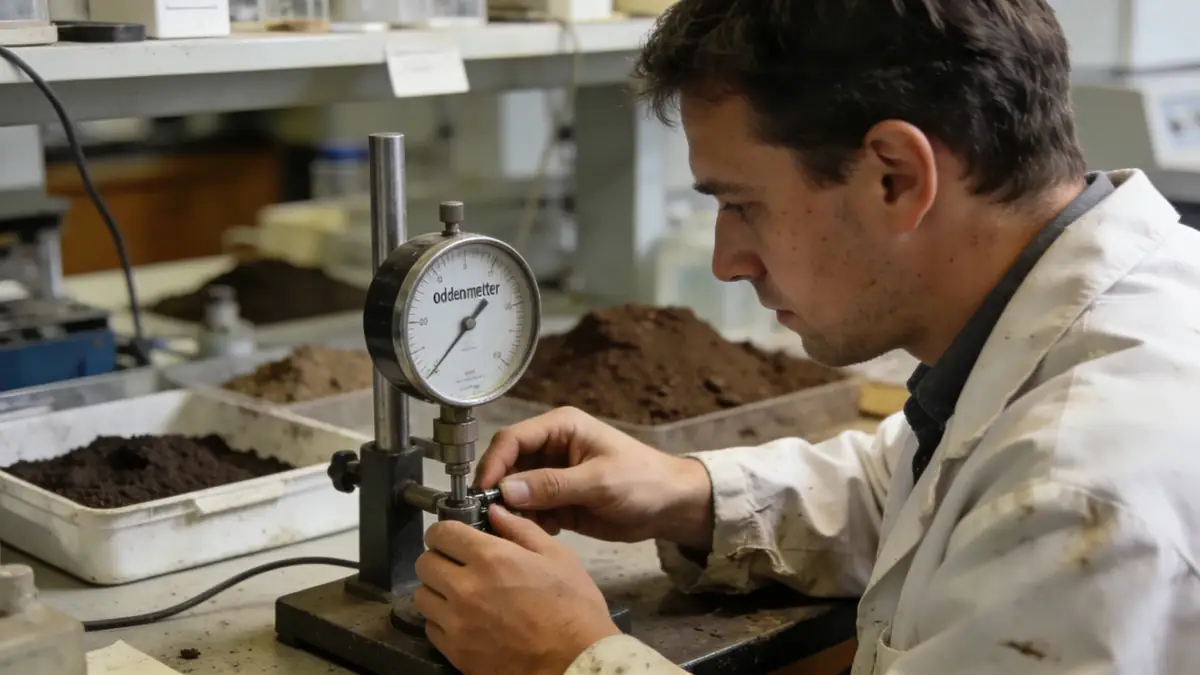
Our methodology in Sioux follows a systematic approach, beginning with a thorough review of existing geologic maps and records. We then conduct field investigations using methods such as spt boring to obtain soil samples and measure resistance. Laboratory testing, including grain size analysis and Atterberg limits, is performed on representative samples to classify soils and determine engineering properties. Data are interpreted to develop subsurface profiles and geotechnical parameters, which inform our recommendations for foundation design, slope stability, and earthwork. This process adheres to standards like ASTM D1586 and ASTM D2487, ensuring consistency and reliability across projects.
Reference Technical Parameters
| Parameter | Reference Value |
|---|---|
| Predominant soil type | Expansive clay (CH) and glacial till |
| Maximum seismic acceleration (PGA) | 0.10g (ASCE 7-16, Site Class D) |
| Typical groundwater level | 3 to 6 meters below grade |
| Bedrock depth | 15 to 30 meters (Sioux Quartzite) |
| Typical N60 range | 5 to 30 blows per 0.3 m |
Local Considerations — Sioux Falls
Sioux Falls sits atop glacial till and clay deposits over Sioux Quartzite bedrock. Expansive soils are common, requiring careful moisture control and foundation design. Groundwater is encountered at shallow depths, particularly near the Big Sioux River. The city’s seismic hazard is low, but site-specific evaluations per ASCE 7 are necessary for critical structures. Neighborhoods on the eastern side often have sandier soils, while western areas have more clay. Our team regularly addresses these conditions, and we coordinate with our geotechnical engineering in Denver office to leverage broader expertise.
Request a Quote
Our team reviews your project and issues an initial report at no cost.
Or write us directly at [email protected]
Services in Sioux Falls
Applicable Standards
- ASCE 7-16
- South Dakota Building Code (IBC 2018 based)
- ASTM D1586 (Standard Test Method for SPT)
- ASTM D2487 (Unified Soil Classification System)
Frequently Asked Questions
What types of soils are commonly found in Sioux Falls?
The predominant soils are glacial till and expansive clays (CH). These soils can exhibit high plasticity and shrink-swell potential, requiring careful evaluation for foundation design. Sandy layers are also present locally, especially in eastern areas.
Does Sioux Falls have seismic design requirements?
Yes, the city adopts the International Building Code (IBC) with ASCE 7-16. The peak ground acceleration (PGA) for Sioux Falls is approximately 0.10g, classifying it as a low-seismic region. However, site-specific soil factors can amplify ground motion, so geotechnical reports must include seismic site classification.
Are geotechnical studies mandatory for construction in Sioux Falls?
For most commercial and multi-family projects, a geotechnical investigation is required by the building official. Single-family homes may be exempt, but site-specific studies are strongly recommended for expansive soils or when shallow groundwater is present.