Methodology

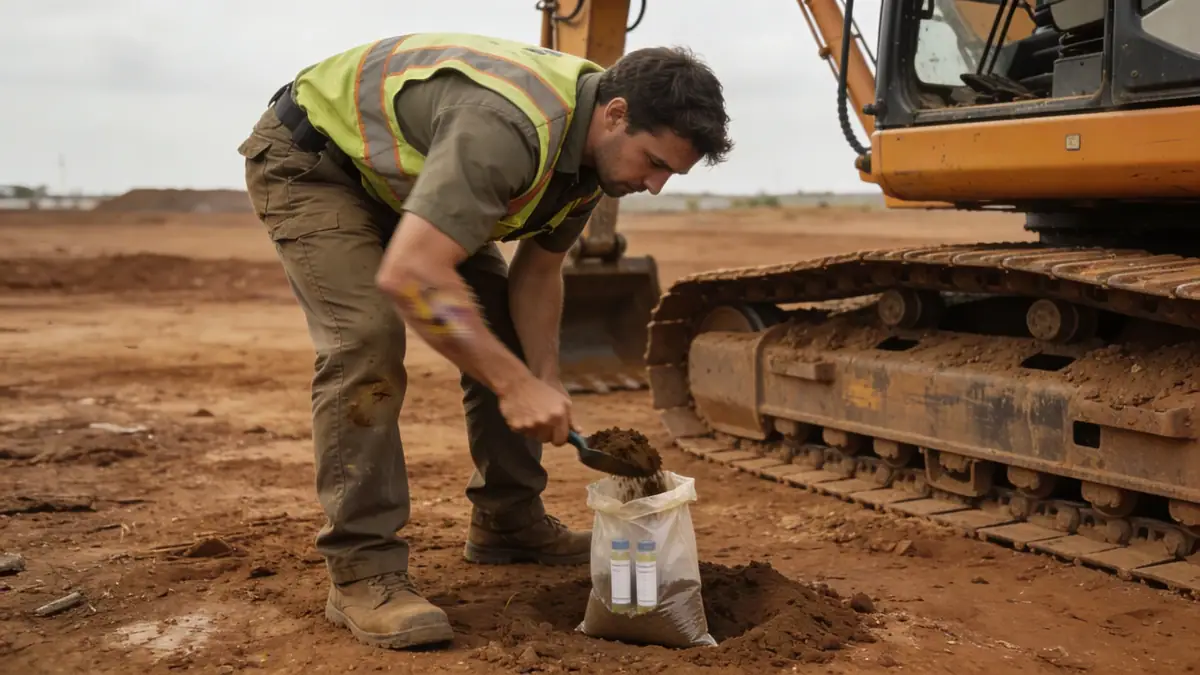
Our methodology for geotechnical engineering in St Paul begins with a comprehensive review of site history and existing geological data. We then conduct field investigations, including spt boring to obtain soil samples and measure resistance, following ASTM D1586 standards. Soil samples are transported to our laboratory for classification and strength testing. We integrate these results with local seismic hazard data, applying ASCE 7 provisions for the Upper Mississippi Valley region. Our team develops site-specific recommendations for foundation design, earthwork, and groundwater control, ensuring compliance with Minnesota building regulations. This systematic approach minimizes risk and optimizes construction outcomes for every project in St Paul.
Reference Technical Parameters
| Parameter | Reference Value |
|---|---|
| Predominant soil type | Glacial till (silty clay with sand and gravel) |
| Maximum seismic acceleration (PGA) | 0.15g (ASCE 7-16) |
| Typical groundwater level | 3–8 m below surface (varies seasonally) |
| Bedrock depth | 10–30 m (Platteville Formation limestone) |
| Typical N60 range (SPT) | 10–30 blows/0.3 m (glacial till) |
Local Considerations — St Paul
St Paul's geology is dominated by glacial till overlying Paleozoic bedrock, with significant variability across the city. The Mississippi River corridor features alluvial deposits with high plasticity clays and silt, often requiring dewatering and deep foundations. Downtown and western neighborhoods (e.g., Highland Park) encounter dense till with cobbles, while eastern areas (e.g., Dayton's Bluff) have shallow bedrock. Seismic design follows ASCE 7 with a PGA of 0.15g, necessitating site-specific response analysis for critical structures. Our team leverages this local knowledge, integrating slope stability evaluations for riverbank developments and coordinating with the Minneapolis office for regional projects. For broader context, our geotechnical engineering en Chicago hub provides additional insights into Midwestern subsurface conditions.
Request a Quote
Our team reviews your project and issues an initial report at no cost.
Or write us directly at [email protected]
Services in St Paul
Applicable Standards
- ASTM D1586 (Standard Penetration Test)
- ASCE 7-16 (Minimum Design Loads and Associated Criteria for Buildings)
- Minnesota State Building Code (Chapter 13 – Structural Tests and Special Inspections)
- OSHA 29 CFR 1926 Subpart P (Excavations)
- ASTM D2487 (Unified Soil Classification System)
Frequently Asked Questions
What types of soil are commonly found in St Paul?
St Paul's soils are predominantly glacial till (silty clay with sand and gravel) deposited during the Wisconsin glaciation. Along the Mississippi River, alluvial deposits of soft clay, silt, and sand are present. Bedrock is typically limestone or dolomite at depths of 10–30 meters.
Is seismic analysis required for buildings in St Paul?
Yes, per the Minnesota State Building Code and ASCE 7-16, St Paul is in Seismic Design Category B with a PGA of 0.15g. Site-specific seismic analysis is required for Risk Category II structures and above, especially on soft soil sites or near the river valley.
Are geotechnical studies mandatory for construction in St Paul?
While not always legally mandated for all projects, most local jurisdictions require a geotechnical report for building permits, especially for commercial, industrial, or multi-story residential projects. Lenders and insurers also commonly require such studies to mitigate risk.