Methodology

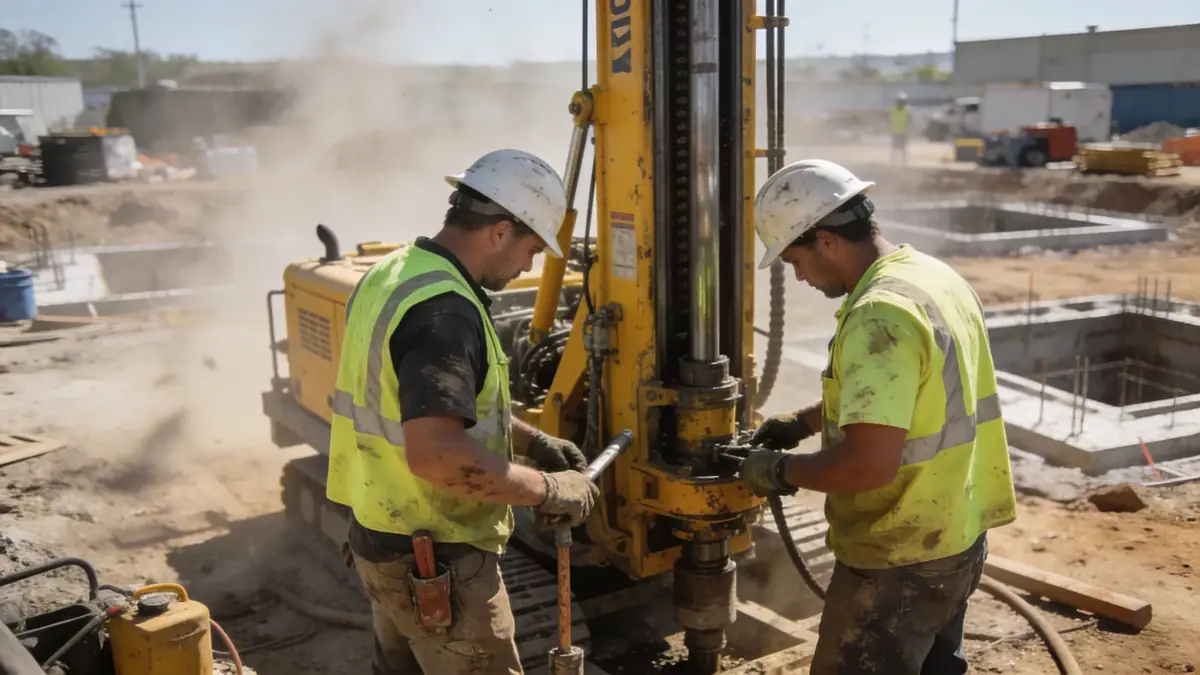
Our geotechnical investigations in Stockton follow a systematic approach, beginning with a review of existing geologic maps and seismic hazard data. We conduct subsurface explorations using standard penetration testing (SPT) as per ASTM D1586, with boreholes typically extending to depths of 8-15 meters for residential projects and up to 30 meters for commercial structures. Soil samples are analyzed in our laboratory for classification, strength, and compressibility. This data informs our engineering analyses for foundation design, slope stability, and earthwork. For detailed information on our spt boring services, please visit the respective page.
Reference Technical Parameters
| Parameter | Reference Value |
|---|---|
| Predominant soil type | Silty clay and clayey silt with sand lenses (alluvium) |
| Maximum seismic acceleration (PGA) | 0.24g for Site Class D (ASCE 7-16) |
| Typical groundwater level | 1.5-3.0 meters below ground surface |
| Bedrock depth | Greater than 30 meters (deep alluvial basin) |
| Typical N60 range (SPT) | 4-15 blows per foot in upper cohesive soils |
Local Considerations — Stockton
Stockton lies within the San Joaquin Valley, characterized by deep alluvial deposits of clay, silt, and sand from the Sierra Nevada rivers. The shallow groundwater table (1.5-3 m) requires careful dewatering and foundation waterproofing. Seismic hazards include liquefaction in loose sandy layers and amplification of ground motions due to soft soils, per ASCE 7-16 Site Class D. The eastern areas near the foothills exhibit stiffer soils, while the Delta region has organic-rich peats. Common challenges include settlement of compressible clays and lateral spreading. Our team coordinates with local building departments to comply with the California Building Code. For more on our soil mechanics laboratory capabilities, see the dedicated page.
Request a Quote
Our team reviews your project and issues an initial report at no cost.
Or write us directly at [email protected]
Services in Stockton
Applicable Standards
- ASTM D1586 (Standard Penetration Test)
- ASCE 7-16 (Minimum Design Loads for Buildings)
- California Building Code 2022
- Caltrans Geotechnical Manual
- ASTM D2487 (Unified Soil Classification System)
Frequently Asked Questions
What are the typical soil conditions in Stockton for foundation design?
Stockton's soils are predominantly alluvial silty clays and clayey silts with occasional sand lenses. These cohesive soils have low permeability and moderate bearing capacity. Shallow foundations are common, but deep foundations may be required in areas with thick compressible layers. Groundwater is shallow, often necessitating drainage systems.
Is a geotechnical study mandatory for construction in Stockton?
Yes, the California Building Code requires a geotechnical investigation for most new structures, particularly in Seismic Design Categories C and D. Local building departments in Stockton enforce these requirements, especially for projects involving significant loads or in areas with known soil hazards like liquefaction or expansive soils.
How does seismic activity affect geotechnical engineering in Stockton?
Stockton is in a region of moderate seismicity, with peak ground accelerations up to 0.24g. Soft soils can amplify shaking, and liquefaction is a risk in loose, saturated sands. Geotechnical reports must evaluate site class, liquefaction potential, and lateral spreading, following ASCE 7-16 guidelines to design safe foundations.