Methodology

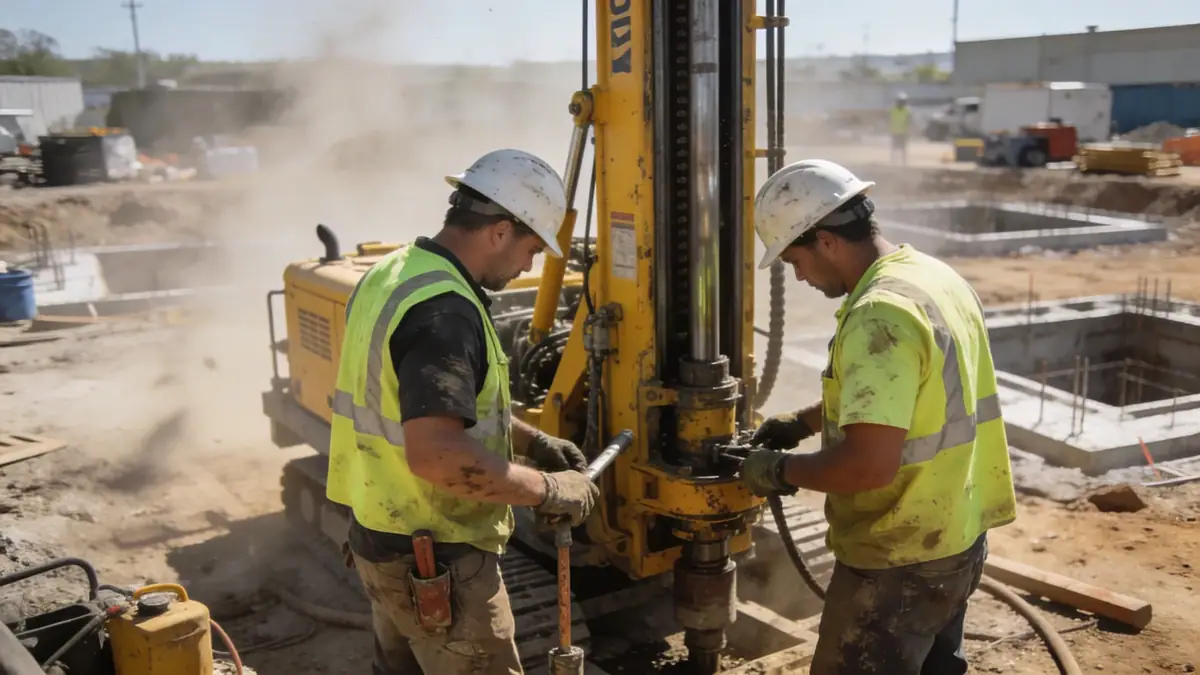
Our approach to geotechnical engineering in Tulsa begins with a comprehensive review of regional geology and existing subsurface data. We then perform targeted field investigations, including spt boring to obtain soil samples and measure in-situ resistance, followed by laboratory testing to determine engineering properties such as strength, compressibility, and hydraulic conductivity. All methods follow ASTM standards, including ASTM D1586 for SPT and ASTM D2487 for soil classification. We integrate these data to develop site-specific geotechnical models that inform foundation design, earthwork, and slope stability evaluations. Our team emphasizes quality control at every stage, from field sampling to final reporting.
Reference Technical Parameters
| Parameter | Reference Value |
|---|---|
| Predominant soil type | Fat clay (CH) and lean clay (CL), with interbedded sandstones and shales |
| Maximum seismic acceleration (PGA) | 0.10–0.15 g (ASCE 7, Site Class D) |
| Typical groundwater level | 3–8 m below ground surface, varies seasonally |
| Bedrock depth | 10–30 m, Pennsylvanian shale and sandstone |
| Typical N60 range | 4–15 in clay, 20–50 in sand/gravel layers |
Local Considerations — Tulsa
Tulsa's geology is dominated by cyclic deposits of clay shale and sandstone, resulting in highly variable soil conditions within short distances. The expansive clay soils in areas like south Tulsa and Broken Arrow pose significant risks for foundation movement, requiring careful moisture control and deep foundation alternatives. In contrast, the alluvial terraces along the Arkansas River present loose sands and silts with liquefaction potential during seismic events. Our team routinely evaluates these risks through site-specific investigations, including soil mechanics laboratory testing for swelling potential and collapsible soil behavior. We also coordinate with local building officials to ensure compliance with Tulsa's adopted building codes, which reference ASCE 7 for seismic loads. For projects requiring regional context, our team coordinates with our main office offering geotechnical engineering en Houston to leverage broader expertise.
Request a Quote
Our team reviews your project and issues an initial report at no cost.
Or write us directly at [email protected]
Services in Tulsa
Applicable Standards
- ASTM D1586
- ASCE 7
- ASTM D2487
- ASTM D3080
- Oklahoma Building Code (IBC-based)
Frequently Asked Questions
What are the typical soil types encountered in Tulsa?
Tulsa's soils are primarily clayey, derived from weathered Pennsylvanian shale, with fat clay (CH) and lean clay (CL) being most common. Interbedded sandstones and shales are present at depth. Alluvial deposits along the Arkansas River include sands, silts, and gravels.
Does Tulsa have specific seismic design requirements?
Yes, the Oklahoma Building Code adopts ASCE 7, placing Tulsa in Seismic Design Category B to C, with a mapped PGA of 0.10–0.15 g. Site-specific response spectra are required for critical structures, and liquefaction assessment is recommended for sites near the Arkansas River.
Are geotechnical studies mandatory for construction in Tulsa?
While not always mandated for single-family homes, the city requires a geotechnical report for commercial buildings, multi-story structures, and projects on expansive soils or filled ground. Many lenders and insurers also require subsurface investigations for risk mitigation.